











Implementing an anti-money laundering (AML) solution is not a one-off event; it marks the beginning of an ongoing process of refinement, monitoring, and improvement. Australian regulatory bodies, including AUSTRAC, expect institutions to continually manage and enhance their AML controls to address emerging threats. This guide provides practical strategies to ensure your compliance team remains effective and up-to-date.
Ongoing Transaction and Customer Monitoring
Effective AML compliance requires constant vigilance. SaaS solutions offer continuous monitoring capabilities, including regular rescreening of customer records against sanctions and Politically Exposed Person (PEP) lists, as well as real-time detection of suspicious transactions. This proactive approach significantly improves upon intermittent manual checks, reducing fraud detection times and significantly increasing accuracy rates in financial services industries.
Compliance analysts must promptly address automated alerts generated by the system. Clear procedures for investigating, documenting, and reporting these alerts should be seamlessly integrated into daily operations.
Global Data offers WatchEye, a comprehensive SaaS AML monitoring platform tailored specifically for Australian regulatory requirements, designed to streamline these processes efficiently. You can learn more about it here.
Regular Rule Tuning and Model Calibration
Continuous improvement of detection rules is essential. After the initial rollout, compliance teams should monitor metrics such as:
- Alert volumes
- False-positive rates
- True-positive detection hits
Periodic model validations and tuning exercises are vital. Thresholds can be adjusted, new detection rules or machine learning models introduced, and ineffective rules retired. Leading organisations use a sandbox or test environment to safely trial rule changes, allowing adaptation to emerging money laundering patterns without disrupting live monitoring.
Agility in Responding to Emerging Risks and Typologies
AML risks evolve rapidly, highlighted by new fraud typologies emerging during events like the COVID-19 pandemic. Compliance teams must respond swiftly by updating detection controls. SaaS platforms facilitate quick deployment of new detection rules or adjusted parameters with minimal IT involvement. For instance, institutions using agile AML solutions reported average response times of under 48 hours to update detection rules in response to emerging fraud typologies during the COVID-19 pandemic.
Real-world examples illustrate the critical importance of agile AML solutions. As detailed in the video above, TD Bank faced penalties exceeding $3 billion due to inadequate AML practices, allowing approximately $670 million to be laundered through its systems (source). Similarly, Danske Bank saw approximately €200 billion in suspicious transactions flow through its Estonian branch due to insufficient AML controls (source). These cases highlight the urgency for financial institutions to adopt responsive AML systems to mitigate risks effectively.
To maintain this agility:
- Develop internal processes for reviewing regulatory warnings and industry intelligence.
- Quickly adapt your AML solution to incorporate these insights, meeting regulator expectations for prompt responses to emerging threats.
Leveraging Automatic Regulatory Updates
AML regulations continually evolve, and compliance solutions must promptly reflect these changes. High-quality SaaS providers regularly update platforms in line with regulatory amendments, such as updates to sanctions lists or new risk indicators. Organisations should ensure their SaaS vendors actively monitor and integrate updates from key regulatory bodies, including AUSTRAC, FATF guidance, and other relevant international directives.
Internally, compliance officers should subscribe to trusted regulatory intelligence services (e.g., Thomson Reuters Regulatory Intelligence) to stay informed about ongoing regulatory changes—often numbering in the hundreds annually.
Audit and Documentation
Maintaining comprehensive documentation is an ongoing requirement, complementing active monitoring. Every system change—including rule adjustments, threshold modifications, or software updates—must be thoroughly documented with clear rationale for regulatory review. Robust documentation supports a strong AML model governance framework and ensures readiness for audits.
Regularly reviewing and updating AML policies, procedures, and risk assessments is essential. These reviews should align with system capabilities and the evolving regulatory landscape.
Measuring Performance and Driving Improvements
Establishing key performance indicators (KPIs) is critical for tracking the effectiveness of your AML solution. Industry data from SQA Consulting and RegTech Consulting suggest the following KPIs:
- Alert-to-report conversion rates: Approximately 2.8% of alerts typically lead to suspicious activity reports (SARs).
- Investigation turnaround times: Automation and effective AML systems can reduce investigation times by about 50%.
- Reduction in manual workloads: Implementing automation can decrease manual AML investigations by up to 66%.
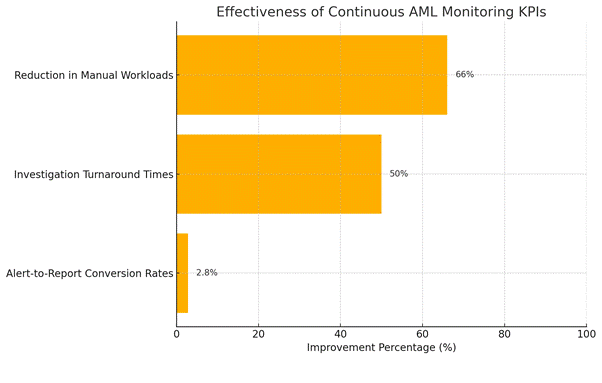
Sources: SQA Consulting, RegTech Consulting.
Monitoring these KPIs provides valuable insights, highlighting areas of declining performance or identifying opportunities for further optimisation. Utilise SaaS dashboards to discuss these metrics during regular compliance meetings, fostering a culture of continuous improvement within your organisation.
Conclusion
Continuous monitoring, agility in addressing emerging risks, timely regulatory updates, rigorous documentation, and performance measurement form the cornerstone strategies for effective AML compliance. Adopting these practices ensures Australian institutions not only meet AUSTRAC’s expectations but proactively strengthen their defence against evolving financial threats.